Updated: July 2026
Your Guide to a Raja Ampat Phinisi Expedition in December
- December marks the start of the dry season, offering calm seas and exceptional underwater visibility.
- Explore the epicenter of marine biodiversity, home to over 1,500 fish and 550 coral species.
- Enjoy five-star service, gourmet cuisine, and curated activities aboard a handcrafted phinisi yacht.
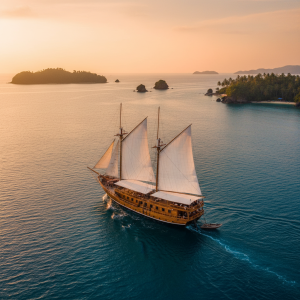
The first light of dawn spills across the deck, warming the hand-sanded ironwood beneath your bare feet. The air, thick with the scent of salt and damp earth, is punctuated only by the gentle lapping of water against the hull and the distant cry of a sea eagle. All around, a panorama of emerald-green karst islands rises vertically from a sea of impossible turquoise. This is not a dream; it is the 7 AM reality of a Raja Ampat phinisi expedition in December. You are untethered from the world, anchored in the planet’s last true paradise, with a full day of bespoke discovery ahead. The only decision on the agenda is whether to explore the coral gardens to port or the hidden lagoon to starboard.
Why December Unlocks Raja Ampat’s Full Splendor
As a travel editor, I’m often asked about timing. For Raja Ampat, the answer is unequivocal: the window from December to March is the gold standard. December, specifically, marks the confident arrival of the northwest monsoon, which, contrary to its name, ushers in the driest and calmest period for the archipelago. The tempestuous winds of the preceding months have subsided, leaving the seas with a glassy, placid surface ideal for smooth sailing between the region’s 1,500-plus islands. This meteorological shift is the primary reason discerning travelers target this month for their voyage. The statistical advantage is clear: average rainfall drops significantly, and while a brief, passing shower is always possible in the tropics, extended periods of sunshine are the norm.
These conditions directly translate to an elevated experience both above and below the water. Onboard, you can enjoy uninterrupted alfresco dining and sunbathing on the expansive decks. More critically, the calm seas open up access to remote coves and dive sites that can be challenging to reach at other times of the year. Underwater, the benefits are even more pronounced. The settled seas lead to a dramatic drop in suspended sediment, pushing visibility to an astonishing 30 meters or more on many days. The water itself maintains a welcoming temperature of 28-30°C (82-86°F), allowing for long, comfortable dives without the need for a thick wetsuit. This confluence of calm seas, clear skies, and crystalline water is precisely why we consider this the best time for a phinisi yacht charter in this part of the world. It’s the season when Raja Ampat truly puts its best face forward.
The Phinisi Vessel: A Floating Atelier of Indonesian Heritage
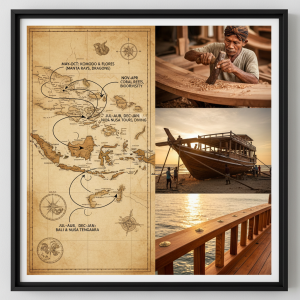
To call a phinisi a “boat” is a severe understatement. It is a floating masterpiece, centuries of seafaring knowledge passed down through generations of the Konjo people of South Sulawesi. Our vessel for the week, a 45-meter, two-masted beauty, was constructed entirely by hand from ironwood and teak, using techniques that have remained largely unchanged. There are no blueprints; the master builder, or punggawa, holds the entire design in his mind. This heritage is the soul of the experience. Yet, stepping inside reveals a world of contemporary luxury. The six guest cabins are more akin to suites at a boutique hotel, complete with air conditioning, ensuite bathrooms featuring rain showers, and fine linens. The crew-to-guest ratio of nearly two-to-one ensures a level of intuitive service that anticipates needs before they are even spoken.
This duality—ancient craftsmanship housing modern comfort—is the essence of a luxury phinisi yacht charter. The onboard chef, for instance, prepared a multi-course dinner of grilled local snapper with a sambal matah that rivaled anything in Seminyak, all served under the stars in the open-air dining salon. The expedition leader, a marine biologist with 15 years of experience in these waters, would use a state-of-the-art flatscreen to brief us on the day’s dive sites, pointing out the specific coral bommies where wobbegong sharks were known to rest. This is not a rustic adventure; it is a highly curated, deeply comfortable immersion into one of the world’s most remote environments. The vessel is not merely your transport; it is your private, roving sanctuary.
Curating Your Expedition: The Wayag vs. Misool Decision
A Raja Ampat phinisi expedition is not a one-size-fits-all affair. The archipelago is vast, covering over 40,000 square kilometers, and is broadly divided into two iconic cruising regions: the north, dominated by the Wayag island group, and the south, anchored by Misool. A typical 8- to 10-day charter necessitates a choice between them. The decision hinges on your personal definition of paradise. The north is the Raja Ampat of postcards. Wayag is a striking labyrinth of conical karst islands, which you can climb for one of the most iconic views in all of Southeast Asia. The journey here is about dramatic landscapes, hidden lagoons accessible only by tender, and a profound sense of scale. The diving is excellent, particularly around the Dampier Strait, but the primary draw is the sheer topographical drama.
Misool, in the south, is a different kind of spectacle. It is, by all accounts, the soft coral capital of the world. The underwater topography is a riot of color, with sea fans the size of dinner tables and corals in every shade of orange, purple, and pink. Marine life here feels denser, more concentrated. It’s a place of immense biomass, where you can explore ancient sea caves and swim in non-stinging jellyfish lakes. The choice between these two regions is perhaps the most significant one you’ll make, and it’s where the expertise of a charter specialist becomes invaluable. The process of customizing your phinisi yacht charter allows you to align the itinerary with your group’s specific interests, whether they lean towards landscape photography, advanced technical diving, or family-friendly snorkeling. For charters extending to 12 days or more, it is sometimes possible to craft an itinerary that incorporates highlights of both, but this involves significant sailing time.
Below the Surface: A December Dive and Snorkel Compendium
Raja Ampat’s claim to fame lies in its marine biodiversity. Located at the heart of the Coral Triangle, the global epicenter of marine life, these waters host a staggering 75% of the world’s known coral species. A single dive site here can contain more species than the entire Caribbean. Dr. Gerald Allen, a renowned ichthyologist, famously recorded 374 different fish species on a single tank dive at Cape Kri—a world record that still stands. In December, the conditions for witnessing this spectacle are perfect. The clear, calm water allows sunlight to penetrate deep, illuminating the vibrant reefs in all their glory. For underwater photographers, this is the holy grail.
The season also brings predictable aggregations of iconic megafauna. Manta Sandy, a world-famous site, becomes a bustling cleaning station where giant oceanic manta rays, some with wingspans exceeding 5 meters, queue patiently for wrasses to pick parasites from their skin. It’s a mesmerizing, humbling ballet. Other sites, like Blue Magic or Melissa’s Garden, offer a dizzying sensory overload of schooling barracuda, reef sharks, and Napoleon wrasse. The onboard PADI-certified dive team manages every detail with military precision, from gear setup to detailed briefings. Their deep local knowledge is critical, as they can time dives to coincide with the currents that bring the most prolific action. Of course, the highest standards of safety and operational trust are paramount, with top-of-the-line equipment and rigorous protocols ensuring peace of mind, allowing you to fully experience in the underwater theater unfolding before you.
Above the Waterline: Avian Wonders and Village Connections
While the underwater world is the main draw, a Raja Ampat phinisi expedition offers just as much wonder above the surface. The early mornings are reserved for terrestrial exploration. On one such morning, we took a pre-dawn tender to a trailhead on Gam Island. A 45-minute trek through the humid jungle, guided by the sounds of the awakening forest, brought us to a clearing. As the sun rose, we witnessed the extraordinary mating dance of the Red Bird-of-Paradise, a creature so vibrant and surreal it seems to have flown out of a fantasy. This is an experience that requires patience and silence, a world away from the vibrant energy of the reefs.
Later in the week, we navigated the phinisi through a narrow channel to Arborek, a small village of about 40 families known for its commitment to marine conservation. The children ran to the jetty to greet us, their laughter echoing across the water. We were welcomed into the community, shown how they create intricate handicrafts from sea pandan leaves, and learned about their sasi system—a traditional resource management practice that creates temporary no-take zones to allow reefs to recover. According to Indonesia’s official tourism board, engaging with these communities offers a vital perspective on the human element of this ecosystem. These encounters, facilitated by our expedition leader, provide a cultural depth that enriches the entire journey, reminding us that this paradise is not an untouched wilderness but a cherished home.
A Quick FAQ for Your December Raja Ampat Expedition
Q: What should I pack for a December trip?
A: Life aboard is barefoot luxury. Pack lightweight clothing, multiple swimsuits, reef-safe sunscreen, a hat, and polarized sunglasses. While it’s the dry season, a light rain jacket is prudent. For a comprehensive list tailored to a phinisi voyage, consult our detailed phinisi yacht charter packing guide.
Q: How do I get to Raja Ampat?
A: The gateway to the archipelago is Sorong (SOQ) in West Papua. You’ll typically fly from Jakarta (CGK) or Bali (DPS). From the moment you land in Sorong, our team handles everything. You will be met at the airport and transferred directly to the harbor where your phinisi awaits, ensuring a seamless and stress-free start to your expedition.
Q: Is a December charter difficult to book?
A: December is the absolute peak season due to the ideal weather and holiday period. The best vessels are often booked 12 to 18 months in advance. We strongly recommend initiating the phinisi yacht charter booking process as early as possible to secure your preferred dates and vessel.
Q: What about connectivity at sea?
A: You should plan for a digital detox. Cellular service is virtually non-existent throughout most of the cruising area. Most phinisis are equipped with a satellite phone for emergencies and may offer limited, slow satellite Wi-Fi for an additional fee, suitable for essential emails but not for streaming or large file transfers.
A Raja Ampat phinisi expedition in December is more than a vacation; it is a complete recalibration of the senses. It is the silence of a hidden bay at sunrise, the thrill of coming face-to-face with a gentle giant of the sea, and the warmth of genuine cultural exchange. It is an investment in an experience that is becoming increasingly rare in our hyper-connected world: true, unadulterated discovery. The Phinisi Yacht Charter Atelier specializes in crafting these extraordinary, life-altering journeys. To explore our fleet and begin designing your own private voyage into the heart of the Coral Triangle, we invite you to discover our world of phinisi yacht charter.